To choose upholstered dining chairs that stay comfortable and look pristine for years, you must select high-density sponge padding, look for a Martindale abrasion rating between 15,000 to 20,000 rubs, and match the fabric type to your household maintenance needs. Evaluating these fabric performance metrics and interior cushioning standards up front ensures your seating thrives under daily use in busy Canadian homes while maintaining its premium aesthetic.
Why Dining Rooms Feel Better with Fabric Chairs
Hard wood or metal seating options have their place, but they rarely encourage people to stay. Modern upholstered dining chairs completely transform the dynamic of a dining room by introducing layers of physical comfort and tactile texture. This physical softness creates a welcoming atmosphere that naturally invites guests to sit back, relax, and linger long after the plates are cleared.
From a design perspective, fabric breaks up the hard, reflective surfaces that dominate most dining environments—such as solid wood tables, tile floors, and painted walls. Whether your interior leans toward a clean contemporary look or a traditional aesthetic, upholstered seating balances these materials to tie the space together. In open-concept layouts across Canada, these chairs also serve a practical zoning purpose, visually defining the dining area as a distinct, comfortable destination within a larger room.
Linen vs. Velvet vs. Performance Fabrics: Three Textile Types to Know
The material covering your chairs determines both the room's visual style and your daily maintenance routine. Weighing how different weaves handle daily wear is essential to finding the right match for your household.
Linen and Linen Blends: Linen offers a relaxed, highly breathable fabric texture that complements modern farmhouse, coastal, or Scandinavian interiors. Its natural, slightly imperfect weave adds an effortless organic character. Because pure linen absorbs liquids quickly, synthetic blends are much better suited for dining environments, preserving the authentic look while dramatically upgrading stain resistance.
Velvet: Velvet delivers rich colour saturation and an incredibly soft, luxurious feel. The unique way it catches the light introduces a premium depth that simpler flat weaves cannot match. Modern synthetic velvets are highly resilient, resisting crushing and everyday abrasion while keeping their plush texture.
Performance Fabrics: Engineered specifically for real life, these materials are treated at the fibre level to repel liquids and resist stains. They are an incredibly smart choice for busy high-traffic households, allowing you to enjoy light fabric shades without worrying about daily messes.
Many Canadian families want the high-end look of delicate fabrics but require materials that handle real-world spills. User feedback shows that our Noya collection solves this exact dilemma, with users frequently noting that the easy-clean fabric looks stunning and handles daily dining messes beautifully.
The Squeeze Test: What Good Cushioning Looks Like
Fabric is what creates the first impression, but foam determines the long-term seating experience. The quality of the interior padding dictates whether a chair remains supportive for years or flattens out after a few months of use.
High density sponge is the benchmark for durable furniture. It provides firm, resilient support and bounces back consistently, holding its shape over years of daily meals. In contrast, low-density foam compresses quickly under body weight, leading to structural sagging and loose, wrinkled exterior fabric within months.
When shopping, look for dense foam wrapped tightly around a solid wood or metal frame to prevent the internal structure from breaking through the padding. Premium chairs, including options throughout our seating lines, utilize high density sponge across both the seat and backrest to ensure uniform comfort and longevity.
Understanding Durability Numbers: Martindale Ratings
Two technical specifications tell you more about a chair’s actual lifespan than any retail description. Focusing on these metrics allows you to verify quality before making an investment.
The Martindale rating measures a textile's resistance to surface abrasion. A specialized testing machine rubs the fabric in a continuous circular pattern until the first signs of wear appear; higher numbers indicate superior weave durability. For residential dining chairs used daily, a baseline rating of 15,000 to 20,000 rubs is highly recommended, translating to roughly 2 to 3 years of heavy daily use before showing any fabric thinning.
An easy-clean fabric rating or moisture-repellent coating is another critical specification to seek out. These built-in treatments keep stains on the surface, making them noticeably easier to maintain over time. For maximum long-term practicality, choosing chairs that feature removable, washable covers provides an extra layer of protection against major accidental spills.
The Smart Way to Clean and Protect Fabric Chairs
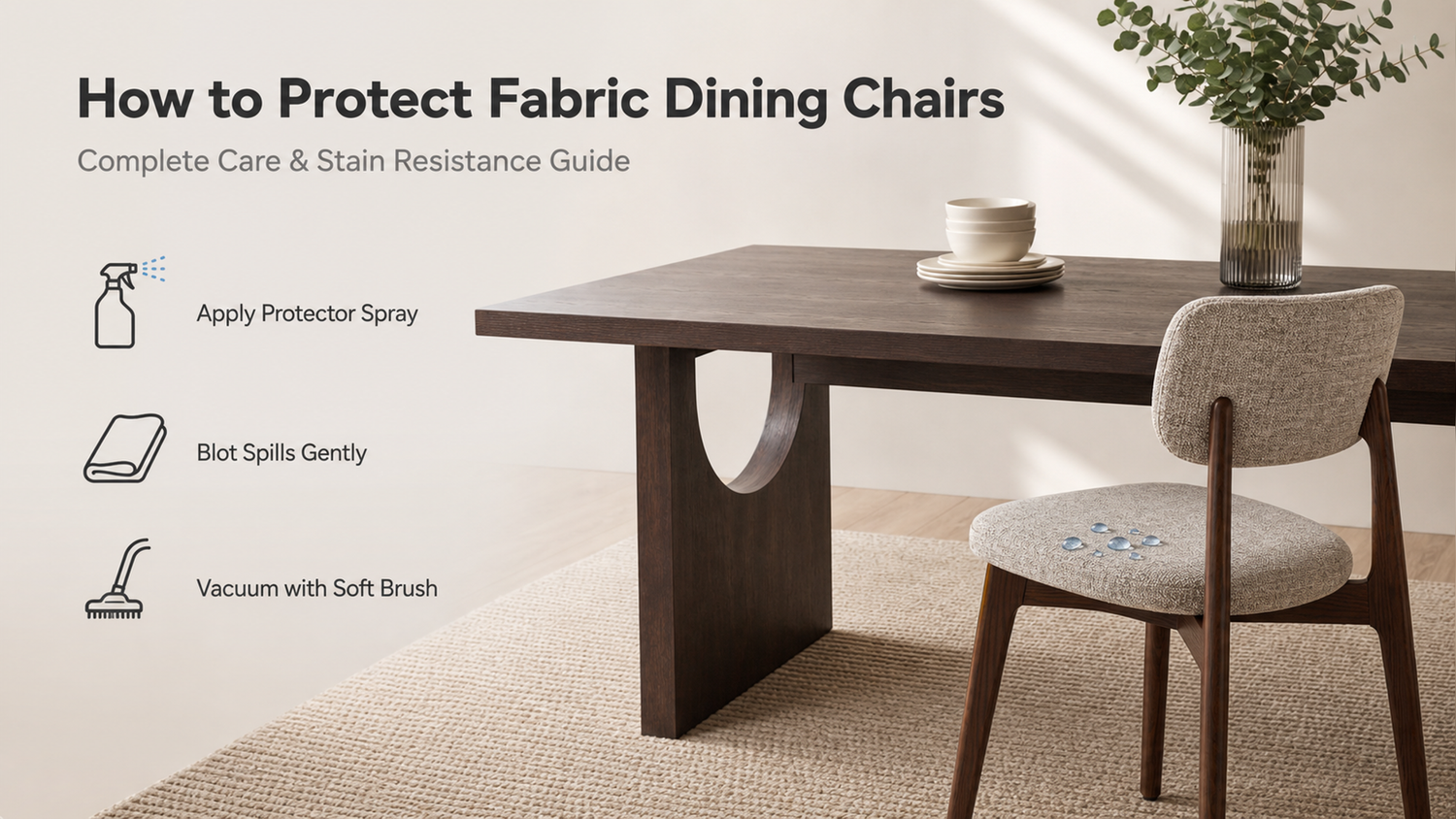
Maintaining pristine upholstery in a dining space relies on a proactive care routine. A few basic preventative measures keep your fabric looking fresh without complicating your household chores.
- Blot liquid spills instantly with a dry, clean white cloth instead of rubbing, which mashes the liquid deeper into the weave and creates permanent stains.
- Vacuum the seat cushions and backrests weekly using an upholstery brush attachment to pull out abrasive dust and crumbs before they grind into the fibres.
- Clean deeper stains by testing a mild detergent and water solution on a hidden spot first, avoiding bleach or harsh chemical cleansers entirely.
- Check the manufacturer's care label for specific fabric cleaning codes before applying any liquid treatments to the surface.
4 Rules for Matching Chair Textures with Your Table
The right chair does not need to match your dining table exactly—instead, it should intentionally complement it. Adhering to a few simple design principles ensures a balanced and cohesive setup.
- Pair solid wood tables with heavily textured fabrics like linen blends or bouclé to create an appealing contrast between smooth wood grains and woven textiles.
- Balance sleek glass or marble modern tables with rich velvet upholstered dining room chairs to soften cold, hard surfaces with deep tactile warmth.
- Contrast dark table finishes with lighter fabric tones, such as cream or light grey, to keep the dining area from feeling visually heavy or restricted.
- Complement minimalist metal frames with structured, tight-weave performance fabrics to maintain clean lines while adding essential cushioning.
Choosing the ideal seating balance requires looking at both performance and style. Understanding fabric characteristics, cushion density, and textile care allows you to make your choice with absolute confidence. To find a wide array of options built with premium materials and practical everyday design, visit the Colamy dining chair collection to explore our full range.
In our customer service logs, the number one regret from furniture buyers is prioritizing initial style over long-term foam density. We see it frequently—chairs chosen purely for aesthetics are much more likely to show premature wear and sagging within the first year. When we engineered our dining collection, we focused directly on solving this by combining heavy-duty internal structures with high density sponge that holds its shape. Our design team loves reading feedback from customers across Canada who report that models like the Noya and ALVA are incredibly easy to assemble and look brand new even after months of heavy family use.