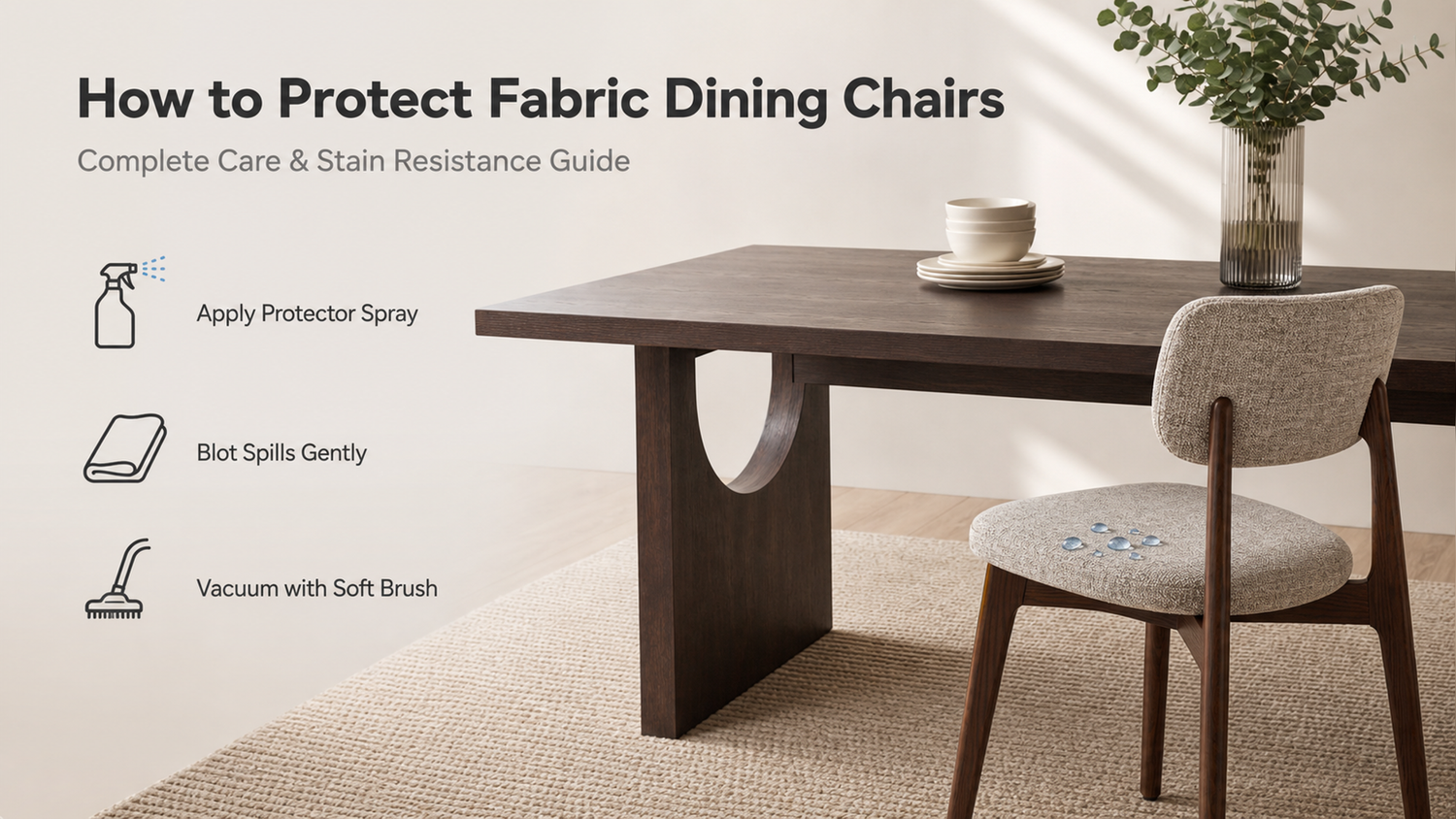
Fabric dining chairs offer warmth and breathability but stain easily; leather wipes clean in seconds but shows scratches over time. The right material for your home depends on your household—here’s how fabric, leather, velvet, and wood compare across comfort, durability, and care. Families with pets should opt for scratch-resistant, wipe-clean PU leather, while those with children are best served by stain-resistant performance fabric. Homeowners seeking high-end luxury should embrace plush velvet.
The Ultimate Dining Chair Material Showdown: Fabric, Leather, Velvet, and Wood
Every seating material brings a distinct physical weight, tactile experience, and operational lifespan to your home, defining how you experience daily meals and host gatherings. The choice goes far beyond mere aesthetics; it dictates how long your furniture survives under daily friction, how easily you can manage accidental spills, and how comfortable your family feels during extended seating. Fabric and velvet upholstery represent the softer, more inviting end of the spectrum, while leather, PU, and solid wood anchor dining spaces with their structural rigidity, classic lines, and practical resilience.
Fabric options remain a staple across Canadian homes due to their ability to soften modern architectural angles and deaden harsh echoes in open-concept kitchen and dining areas. However, their porous nature means liquids penetrate quickly, making them vulnerable to deep staining. Leather and premium PU alternatives offer a contrasting sleekness, instantly projecting a sophisticated, executive atmosphere. They are highly hygienic because they repel dust, pet dander, and food crumbs, though low-quality vinyls can suffer from peeling under heavy UV exposure near large dining room windows.
Velvet and solid wood lie at opposite extremes of texture and home maintenance. Velvet is historically associated with luxury and tactile indulgence, offering a deep pile that catches overhead lighting beautifully, yet its delicate fibers demand precise care. Solid wood, the most dependable furniture material, offers organic warmth, immense strength, and a zero-emission footprint when sourced responsibly. Its rigidity guarantees structural integrity over decades, but it lacks the immediate contouring comfort of upholstered alternatives, requiring clever ergonomics or supplemental seat pads to support long, lingering dinners.
Scoring the Four Core Seating Materials Across 7 Key Metrics to Compare
To help you systematically evaluate your options for your home, we have rated fabric, PU/leather, velvet, and solid wood on a scale of 1 to 5 (with 5 representing the absolute peak of performance) across seven essential purchasing criteria, expanding on sensory comfort, acoustics, price expectations, and environmental impact.
1. Comfort and Cushioning
- Velvet (5/5): Offers unmatched softness, deep pressure relief, and a luxurious sink-in feel that feels incredibly welcoming.
- Fabric (4/5): High natural flexibility provides excellent body contouring and ergonomic support for extended sitting.
- PU/Leather (3.5/5): Offers moderate cushioning, though synthetic options can feel slightly stiff until broken in; some newly manufactured items may release a faint synthetic scent that dissipates in a well-ventilated space.
- Solid Wood (2/5): Structurally rigid and unyielding; relies entirely on the precision of seat-pan carving and ergonomics for comfort.
2. Seasonal Breathability and Temperature Comfort
- Fabric (5/5): Exceptionally breathable, preventing heat retention during hot humid summers; naturally temperature-neutral.
- Solid Wood (4/5): Stays at ambient room temperature; does not trap body heat or cause perspiration.
- Velvet (3/5): Provides unmatched warmth during dry, freezing Canadian winters, but can feel excessively warm and stuffy during summer.
- PU/Leather (2.5/5): Non-porous surface can feel cold in winter and sticky in summer; requires micro-perforations or breathable backing to improve temperature regulation.
3. Acoustic Performance and Noise Reduction
- Fabric (5/5): Acts as an excellent sound-absorbing barrier, deadening harsh clattering cutlery and echoing voices in open-concept spaces with hardwood or tile.
- Velvet (4.5/5): Heavy, dense pile effectively absorbs sound waves, softening the acoustic profile of the dining area.
- PU/Leather (2/5): Minimal acoustic absorption; hard surfaces reflect sound waves, though padded cushions help slightly.
- Solid Wood (1/5): Zero sound absorption; hard surfaces fully reflect sound and can cause chairs to slide noisily on bare floors without felt pads.
4. Durability and Structural Lifespan
- Solid Wood (5/5): Virtually indestructible; can be sanded down, refinished, and passed down through generations.
- PU/Leather (4/5): High-quality polyurethane resists cracking and stretching, outlasting standard woven fibers.
- Fabric (3/5): Susceptible to pilling, fraying at the seams, and thread pulling over years of heavy friction.
- Velvet (2.5/5): The delicate pile can crush, bald, or develop permanent "shading" patterns under continuous high-use pressure.
5. Maintenance Ease and Cleanability
- Solid Wood (5/5): Completely waterproof and non-porous; sanitizes instantly with a simple damp cloth and mild soap.
- PU/Leather (4.5/5): Liquids bead on the surface; grease, wine, and coffee wipe away effortlessly without leaving deep residue.
- Velvet (2.5/5): Demands specialized upholstery brushes, steam treatments, and immediate blot-cleaning for liquid accidents.
- Fabric (2/5): Acts as a physical sponge for liquid spills, dust, and food oils, often requiring professional steam extraction.
6. Affordability and Return on Investment
- PU/Leather (5/5): Offers the prestigious appearance of top-grain leather at a fraction of the cost, maximizing budget efficiency.
- Fabric (4/5): Highly accessible with a vast range of mid-tier pricing, though frequent replacements can lower long-term ROI.
- Solid Wood (3/5): Higher initial upfront cost, but boasts the lowest cost-per-year ratio due to its sustainable, generational lifespan.
- Velvet (2.5/5): Typically carries a premium price tag due to the complex weaving process and delicate handling requirements.
To give you a rough sense of investment, PU leather chairs typically fall in the $120–$300 range per chair, making them the most accessible entry point. Fabric and solid wood generally sit between $150–$400 and $200–$800 respectively, depending on wood species and fabric grade, while velvet commands a premium starting around $250 and climbing quickly with higher-end brands. These price ranges reflect variations in material quality, brand positioning, and construction methods—higher prices often mean better foam density, stronger frames, or more durable finishes.
7. Environmental Footprint and Sustainability
- Solid Wood (5/5): High sustainability; completely biodegradable, renewable, and carbon-capturing when sourced from responsibly managed forests.
- Fabric (4/5): Moderate footprint; frequently made from natural cottons, linens, or highly recyclable post-consumer polyester.
- Velvet (3/5): High energy consumption during weaving; typically composed of petroleum-derived polyester, though its long-term durability offsets short-term impacts.
- PU/Leather (2/5): Petroleum-based topcoats are slow to biodegrade; however, modern water-based PU manufacturing continues to reduce toxic chemical processing.
Scenario-Based Selection: Finding the Perfect Match for Your Space and Lifestyle
Choosing the right seating material requires matching its inherent physical properties to the scale of your dining space, your design style, and your specific household members.
Small vs. Large Spaces: Managing Scale and Visual Weight
In compact apartments or cozy breakfast nooks, heavy or dark furniture can make the room feel cramped. For these tight spaces, dining chairs with a seat height of 45 cm (18 inches) made from lightweight solid wood or light-coloured woven fabric keep the area looking open and airy. Their slender profiles allow them to slide fully under the table when not in use. Conversely, grand, formal dining rooms with high ceilings require substantial furniture to anchor the space. High-back leather chairs or oversized velvet armchairs prevent the room from feeling empty and cold, providing a sense of comfort and grandeur.
Decor Harmony: Matching Your Home's Interior Design Style
Your choice of chair material should naturally complement your existing decor. If your home embraces a modern, minimalist, or mid-century industrial aesthetic, the clean lines, sharp tailoring, and metal accents of PU leather chairs offer the perfect pairing. For those who favour a warm Scandinavian, coastal, or classic farmhouse vibe, soft woven fabric dining chairs or natural solid wood designs bring the essential organic texture and cozy warmth required to complete the look.
Active Households: Navigating Kids and Pets
Active homes require materials that shrug off daily chaos without sacrificing style. For families with toddlers or young children, performance fabric dining chairs treated with moisture-barrier coatings are highly recommended, as they allow you to blot away spills before they soak into the cushion. If your household includes furry friends, traditional woven fabrics act like magnets for pet dander and invite cat claw snagging. Homeowners with pets should select high-density, scratch-resistant PU leather; pet hair slides off effortlessly, and the slick, durable surface resists claw damage.
Premium Entertaining: Pursuing Texture and Quality
If your dining room is the designated hub for hosting dinner parties, holiday feasts, and intimate gatherings, comfort and tactile luxury take precedence. Homeowners pursuing premium texture and ultimate quality should choose velvet dining chairs. Velvet offers a plush, cushioned seat that keeps guests comfortable during hours of conversation. Its rich pile catches the warm dining room light beautifully, adding an instant layer of luxury and sophisticated drama to any evening meal.
Smart Mixing and Matching: The Hybrid Solution
Beyond choosing a single material for all your chairs, another option is worth considering: mixing materials within the same set. For many homeowners, the ultimate solution lies in hybrid dining chair designs that combine the best properties of multiple materials. A highly popular and practical choice is a dining chair featuring a sustainable solid wood frame paired with an upholstered seat cushion. This clever pairing delivers the unmatched structural integrity, eco-friendly footprint, and timeless organic beauty of wood, while addressing its primary drawback—hardness—with a plush, fabric, or wipe-clean PU leather seat pad. This hybrid approach allows you to achieve a cohesive, designer look without sacrificing the daily comfort your family deserves.
A Deep Dive into Material Characteristics and Care Guidelines
Maintaining the pristine look of your dining chairs requires understanding how each material behaves under different environmental conditions in Canadian homes and using the correct cleaning techniques.
Woven fabrics rely on yarn density and fiber composition for their strength. Tight, flat-weave polyesters are highly resilient, but they still collect dust and fine food particles within the weave over time. Regular vacuuming with an upholstery brush attachment is vital to prevent these particles from grinding into the fibers and causing premature wear. For spot-cleaning, always blot instead of rubbing to avoid spreading the stain or creating a fuzzy patch on the surface.
Polyurethane (PU) leather mimics the cellular structure of genuine leather but uses a synthetic top coat that blocks liquids. While highly stain-resistant, it remains sensitive to harsh chemical solvents like bleach or alcohol, which can strip the protective top layer and cause cracking over time. To clean, use a microfibre cloth damp with warm water and a drop of gentle dish soap. Keep these chairs away from direct heater vents and intense, unfiltered Canadian sunlight to preserve their elasticity.
Velvet requires a delicate touch to keep its signature sheen looking plush. The most common issue with velvet is pile crushing, which occurs when heavy objects sit on the fabric for extended periods. This can be resolved by gently steaming the area and using a soft-bristled clothes brush to revive the fibers in the direction of the natural nap. Never apply direct, hot iron heat to velvet, as this will instantly scorch and melt the synthetic fibers.
Solid wood behaves like a living material, expanding and contracting slightly with seasonal humidity shifts. To prevent joints from loosening or wood from checking, maintain a stable indoor humidity level of 35% to 55% in your home. Avoid placing hot serving dishes directly on wooden seats or backrests without a protective pad, and dust regularly with a dry, soft cloth to prevent fine dust from scratching the protective lacquer finish.
Choosing the right balance between design and utility does not mean you have to compromise on either. Exploring our curated selections allows you to find furniture pieces that blend high-end design with the practical durability required for everyday Canadian living. To discover the perfect fit for your lifestyle, explore the Colamy dining chairs today.
Our experience working with Canadian families reveals that the most common mistake is choosing a dining chair purely based on looks without considering daily maintenance habits. We frequently hear from customers who transitioned from high-maintenance fabrics to our easy-to-clean PU leather options, expressing immense relief at how much stress it removed from family dinners. Feedback on models like our Noya dining chair consistently highlights how they look stunning and perfectly match Scandinavian style dining tables, while being incredibly easy to assemble. By focusing on smart material engineering, we ensure you receive high-end comfort and durability without the premium price tag.